
The ultimate guide to moving to Indian Hill OH in 2026
get a free quoteThinking about moving to Indian Hill OH in 2026? Then you are looking at one of the most exclusive and low-density communities in Hamilton County. The Village of Indian Hill sits northeast of Cincinnati and covers close to nineteen square miles. Around 6,000 residents live here, spread across large lots and long driveways rather than tightly packed streets. There is almost no commercial zoning in the village. How do you plan a move when most properties sit on private lanes? What happens with trucks, permits, taxes, and school timing? Many people even start their research by talking with experienced movers in Cincinnati OH who know Indian Hill’s layout and rules.
Is moving to Indian Hill OH in 2026 a good idea for you?
Indian Hill tends to fit households that want
- space
- privacy
- stable long-term plans
Median household income sits around two hundred twenty to two hundred thirty thousand dollars, while per capita income reaches roughly one hundred fifty thousand dollars. Poverty rates stay very low, under three percent. Most of the roughly 2,300 households are owner-occupied, and many are married couples with smaller household sizes near two people.

Rentals exist but remain scarce, and median gross rent usually sits just above one thousand dollars. That figure can be misleading, though, because higher-end rental homes often cost much more. Indian Hill is one of the top places in Greater Cincinnati metro area for young professionals who are moving to Indian Hill OH in 2026 and commute to:
- downtown Cincinnati
- Blue Ash
- Kenwood
- Montgomery corridor
Average commute times hover in the low twenties minutes, which many find reasonable. However, people who want cafes, shops, and nightlife within walking distance usually feel disappointed. There is almost no retail inside the village, so every simple errand means getting in the car and driving to a nearby suburb. If you are unsure whether this lifestyle fits you, it helps to talk with providers of Cincinnati moving services who frequently see which families thrive here and which feel restricted.
How the layout affects move to Indian Hill Ohio
Indian Hill stretches along the Little Miami River and covers nearly nineteen square miles. Population density stays low, around three hundred residents per square mile. Main roads that you should put on your checklist for Indian Hill OH move include:
- Drake Road
- Shawnee Run Road
- Given Road
- Indian Hill Road
Many homes sit along smaller lanes that branch off these routes, often with limited shoulders and tight curves. Downtown Cincinnati lies roughly thirteen to fifteen driving miles away, depending on your exact address. In light traffic, that drive can take under twenty minutes. During heavier periods on I-71 or feeder roads like Red Bank Road and Kenwood Road, commute times often reach thirty minutes or more.

Because the village has almost no commercial zoning, residents moving to Indian Hill OH in 2026 drive out for nearly everything.
- Kenwood Towne Centre and surrounding stores on Montgomery Road cover many daily needs.
- Smaller centers in Madeira and Mariemont serve groceries, pharmacies, and services.
- Another key layout detail involves open space. Thousands of acres belong to the Green Areas Trust or sit under conservation easements. These protected areas limit new road connections and keep routes indirect.
Newcomers should test their planned commute during rush hour, not only midday, before they choose a specific pocket or street. It can also help to ask local moving companies in Cincinnati Ohio which streets tend to give movers and commuters the most trouble.
Housing market checklist for Indian Hill OH move
Housing in Indian Hill sits at the top of the regional price range. Recent online estimates place average home values around 1.59 million dollars, with many listings near or above 1.8 million dollars. Price per square foot often falls in the low four hundreds, which outpaces most surrounding suburbs and the wider Cincinnati metro.
Market activity also feels different here. At some points, you may see only twenty or so active listings across the entire village. That tight inventory means buyers sometimes watch the market for months before seeing a property that fits their needs, style, and budget. Median sale prices often sit around 1.6 million dollars, but year-to-year swings can exceed fifteen percent when a few very high-end deals close.

Because of that volatility, many buyers arrange flexible closing windows or bridge options. Short-term housing in nearby Blue Ash, Kenwood, or downtown Cincinnati can help while you wait for the right home or for renovations to finish. Following listing activity weekly, not just monthly, gives a clearer sense of timing and leverage. If you want practical insight into how long moves here really take, talk with Indian Hill movers who regularly handle closings and move-in schedules in this market.
Taxes, cost of living, and budget planning for moving to Indian Hill OH in 2026
Taxes and ongoing costs deserve careful attention long before you schedule a move to Indian Hill Ohio. Indian Hill has a municipal income tax layered on top of federal, state, and county taxes. The village rate has been0.45 percent, and officials have discussed increasing it to 0.5 percent starting in 2026. That quarter-point difference may sound minor, but it matters when household income sits in the two hundred thousand dollar range or higher.
Property taxes also run high because assessed values are high. Median annual property tax bills sit around ten thousand dollars, and many households pay far more. When you compare Indian Hill with Cincinnati and nearby suburbs, focus on the total monthly package. Include the following costs on your checklist for Indian Hill OH move:
- mortgage payments
- property taxes
- homeowner’s insurance
- lawn care
- tree work
- private snow removal
Utility aggregation programs help keep electric and natural gas prices more predictable. Current electric aggregation contracts lock in a set kilowatt-hour rate through 2028, while gas aggregation contracts update periodically. Before you sign a purchase contract, build a five-year checklist for Indian Hill OH move that includes:
- likely tax changes
- energy rates
- maintenance costs specific to your address
You can also ask experienced Cincinnati home movers what kind of ongoing costs new clients who plan a move to Indian Hill Ohio here often underestimate.
Zoning rules, permits, and renovation planning for the move to Indian Hill Ohio
Zoning and land use rules in Indian Hill shape almost every project you might plan. The village land use plan covers about nineteen and a half square miles and emphasizes residential and agricultural character. There is no industrial zoning and very limited business use within the borders. Most properties fall under single-family residential or agricultural categories, with minimum lot sizes and strict setbacks.

If you want to subdivide land, adjust lot lines, or add structures, you deal with subdivision regulations and the Planning Commission. Standard construction drawings guide how infrastructure and roads must be built. If your project touches the public right-of-way, be sure to look ask permits for:
- a new driveway apron
- utility connection
- heavy dumpster pad near the street
Portable storage units and contractor trailers sometimes require coordination with the Public Works department, particularly on narrow lanes. Short-term rentals, accessory buildings, and certain home-based activities fall under specific ordinances and may face extra review. Smart newcomers review zoning maps, subdivision regulations, and current ordinances before signing contracts with architects or builders. When you know major renovations are ahead, it also makes sense to talk with a reputable packing service in Cincinnati provider who can help stage belongings during phased construction.
Truck access, road rules, and driveway challenges of moving to Indian Hill OH in 2026
Moving trucks face practical limits inside Indian Hill that you should address early. Many homes sit at the end of long, curved, and sometimes steep driveways. Some driveways pass near protected green areas or wooded slopes. Full-size tractor-trailers may not handle those turns safely, especially when loaded with furniture. In addition, some local streets have narrow shoulders and limited space for staging. Parking a large rig along Shawnee Run Road, Drake Road, or a smaller lane could obstruct both directions of traffic.
- Village ordinances control parking direction, sightlines, and safe use of public streets.
- The Public Works department already restricts trash collection when driveways or access points are blocked or unsafe, which shows how seriously they treat access.
- Bulk item collection for old furniture and broken boxes also requires separate arrangements.
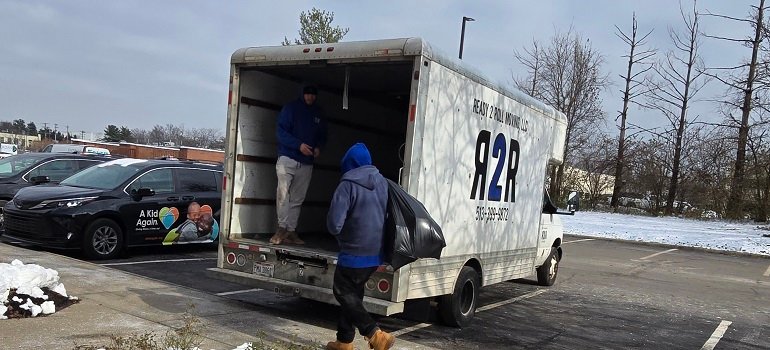
For many residents, the easiest solution combines smaller shuttle trucks, driveway-friendly box trucks, or moving vans with careful scheduling. Crews load from a larger truck parked at a wider staging area, then shuttle loads in. If you are relocating from another state or across the country, you may also want to coordinate with long distance moving companies in Cincinnati that already know which Indian Hill streets handle big rigs well.
Weather, seasons, and timing your move to Indian Hill Ohio for safer conditions
Local weather can quickly turn a straightforward move into a messy experience. Indian Hill sees about forty-four inches of rain per year, which is more than the national average. Snow totals usually land between fourteen and sixteen inches annually, mostly from late November through March. Winter weather brings a real risk of ice on long or shaded driveways, especially on sloped lots. That ice affects not just your car but also loaded moving trucks and crews carrying boxes. Average annual high temperatures sit around sixty-five degrees Fahrenheit, while average lows hover near forty-five.
Spring months like April, May, and June often bring eight to ten centimeters of rain each month. That kind of rainfall softens gravel drives and lawns, making heavy truck access harder and sometimes messy. Summers bring humid days, with highs often around eighty-five to ninety degrees Fahrenheit. Crews working in that heat over long carry distances from road to house tire quickly. When you look at possible dates, compare weather norms, driveway conditions, and contractor availability.
Schools, families, and planning moves around the district calendar
For many families planning a move to Indian Hill Ohio, the school district drives the decision more than anything else. As a matter of fact, Indian Hill Exempted Village School District serves roughly 2,200 students and enjoys strong state rankings. Student-teacher ratios sit around fifteen to one, and test results often fall in the top tiers statewide. The four main schools share a campus along Drake Road near Shawnee Run Road. These include the primary, elementary, middle, and high school buildings.

To enroll, families must prove residency inside the district, which closely matches village boundaries. That means your closing date and occupancy timing can affect when your children can start. School calendars, enrollment windows, and bus routes appear on the district’s website, usually months in advance. Some families choose nearby private or parochial schools in Cincinnati, which can change daily travel patterns and pickup times.
When should you actually move to Indian Hill Ohio? Many parents prefer summer, when children have fewer commitments. Others use breaks during the year to shift without interrupting major exams or activities. When you start packing, it also helps to secure sturdy moving boxes in Cincinnati Ohio so school materials, laptops, and important documents stay organized and easy to unpack.
An essential checklist for Indian Hill OH move: How to set up your new home?
Utilities and everyday services in Indian Hill follow a pattern that surprises some newcomers. Make sure to put the following services on your checklist for Indian Hill OH move:
- Electric service generally comes through Duke Energy, but the village negotiates aggregation contracts that set a specific rate per kilowatt hour for participating residents. Current electric aggregation runs through August 2028 at a fixed price, which helps with budgeting.
- Natural gas aggregation with a regional supplier starts a new term in late 2025 and also offers a set rate for several years.
- Trash and recycling pickup follow village routes and rules. Residents can use standard cans up to a set weight or village-issued “toters.”
- Recycling usually occurs on the same day as trash, but on a bi-weekly schedule. After a move, when you have large piles of broken boxes and unwanted furniture, you need to arrange bulk pickups separately.
- For daily errands, most residents drive to Kenwood Towne Centre and surrounding stores along Montgomery Road, or to smaller centers in Madeira and Mariemont. Those trips cover groceries, pharmacies, banking, and routine services. Reviewing these patterns before you move to Indian Hill Ohio makes the first weeks feel less confusing.
Final tips for moving to Indian Hill OH in 2026
Indian Hill delivers large properties, preserved green areas, and a highly regarded school district, yet those benefits come with complex logistics and higher costs. Before completing moving to Indian Hill OH in 2026, build a written checklist that covers housing steps, taxes, commute routes, permits, school enrollment, and utility setup. Review village and county information again as your move to Indian Hill Ohio approaches, so your decisions match the latest facts.