
Maximizing daylight during your February move: Tips for a smooth transition
get a free quoteMoving in February is a different game than moving in June. You still have a full day to work with, but the clock feels tighter and the weather adds a few extra twists. During a Winter relocation in Ohio, for example, an early day gives you a little over ten Winter daylight hours for a February move, and by the end of the month that grows to just over eleven hours. That might sound like plenty until you factor in late sunrises, early sunsets, and time lost to snow, ice, and traffic. Working outside too long can get uncomfortable fast. Instead of guessing, it helps to treat daylight like a real resource you plan around.
Understand February daylight before you choose a moving date
Before you even pick a date, it helps to look at real sunrise and sunset times instead of trusting your memory. For a mid-February day in Cincinnati, sunrise usually lands around 7:35–7:40 a.m., and sunset often falls close to 6:05–6:10 p.m. That gives you roughly ten and a half Winter daylight hours for a February move, which is enough for a local February move around limited daylight but not for endless back-and-forth trips. Compare that with June, when daytime can stretch to nearly fifteen hours, and you see why a February move around limited daylight needs tighter planning.

Snow is another big piece. In February, Cincinnati sits near the peak of its snowy period, with average monthly snowfall a bit over three inches. Some years barely bring a dusting; others stack up well over eight inches. January and February usually share similar snowfall totals, so winter is still very much alive. When you add in overcast days and freezing rain, the actual “usable” light can feel even shorter.
Many moving companies in Cincinnati Area schedule winter jobs with these limits in mind. So is February a bad month to move? Not necessarily. It can work very well; it just rewards people who keep an eye on daylight and weather instead of assuming everything will look like April.
Pick a day and start time with maximizing daylight during your February move in mind
Once you understand how short the days really are, you can choose a smarter date and start time. Many moving companies see lower demand in winter, so prices often run noticeably lower than peak summer rates. That can make a February move around limited daylight tempting, especially if you are flexible with timing. But daylight still sets the rules.
On a typical early-February day in Cincinnati, the sun may not clear the horizon until around 7:40 a.m., and it is gone again shortly after 6:00 p.m.
- That means scheduling a truck for 8:00 or 9:00 a.m. is usually ideal.
- You have enough light to see what you are doing, and you still reserve the brightest Winter daylight hours for a February move—roughly 10:00 a.m. to 3:30 p.m.—for heavy lifting and long outdoor walks.
- Safety guidelines for cold weather also suggest maximizing daylight during your February move and doing the hardest outdoor work during the warmest part of the day.

Quality Cincinnati moving services often recommend these earlier winter slots to budget-conscious families. What if you can only move after work? In that case, keep expectations realistic. An evening February move around limited daylight should focus on lighter tasks:
- a few carloads of boxes
- setting up a bedroom
- moving items into a nearby storage unit
Trying to squeeze a full-scale February move around limited daylight into a three-hour window of fading light usually leads to stress and mistakes.
Build a timeline for maximizing daylight during your February move
Once you pick your date, map out your day around daylight instead of simply writing “start at 9, finish at 5.” It helps to put actual times on paper: sunrise, solar noon, sunset, and even dusk. For a February move around limited daylight:
- sunrise might be around 7:37 a.m
- solar noon near 12:45 p.m
- sunset close to 6:07 p.m.
- usable dusk for maybe 20–30 more minutes
Now, think in blocks. The first hour can go to final packing and staging boxes near doors. Late morning and early afternoon—say 10:00 a.m. to 3:00 p.m.—is prime time for loading heavy furniture, walking up and down stairs, and navigating tricky driveways. That is when visibility and temperatures both reach their best levels for the day. Cold air still carries risks, especially if you work hard, sweat, and then cool down quickly, so build in short warm-up breaks every 60–90 minutes. A quick snack and a glass of water help more than people expect.

As you get within an hour of sunset, shift to indoor tasks at the new place: unpacking essential boxes, assembling beds, and connecting electronics. Experienced local movers in Cincinnati teams often structure their day around a similar daylight curve. Set a clear rule as a group: no new heavy lifting outside after dark unless it is a genuine emergency. That single rule often prevents the rushed, last-minute injuries that ruin a long day.
Prepare your current home to let in more light independent of the Winter daylight hours for a February move
Your current home can either support your schedule or work against maximizing daylight during your February move.
- Start by finding which windows get the best winter light. In Ohio, south- and west-facing windows usually pick up the strongest midday and afternoon sun.
- Clear anything blocking those windows: tall bookcases, stacks of boxes, indoor plants, or drying racks.
- Pull curtains back, raise blinds fully, and give the glass a quick clean so you get every bit of brightness.
- Indoor lighting matters just as much. Many homes use moderate bulbs in living areas, but hallways and staircases often stay underlit.
- Swapping a few dim bulbs for brighter LEDs in key spots—stairwells, entryways, the basement—can make carrying boxes much safer.
- Outside, snow and ice are the main troublemakers. Slips, trips, and falls make up a large share of winter injuries, especially in parking lots and on steps. Shovel your walkways wide enough for two people carrying furniture side by side, then treat any slick areas with salt or sand.
- Check handrails and make sure they feel solid. Good light and clear paths together do more for safety than any gadget you could buy.
Get the new home ready with power, heat, and lighting in spite of Winter daylight hours for a February move
Now shift your focus to the new place. It should feel ready the moment the first box comes through the door. Utility providers often need at least a day or two to start electricity and gas, and sometimes longer during busy periods or after storms, so contact them well before your February move around limited daylight. Once power is on, walk room by room and test every overhead light and outlet. Bring a couple of spare bulbs and a small lamp so you can fix dark corners immediately.
Think about how the space will work when maximizing daylight during your February move, not just in everyday life. Staircases, long hallways, and entryways need especially strong lighting because people will carry bulky items through them. February in Cincinnati typically brings several days of snow or rain. That means people will need warm indoor spots for breaks, plus bright, safe paths from truck to living areas. Outside, clear driveways and sidewalks as early as possible and treat icy patches. Winter conditions regularly lead to more slip-and-fall injuries, and you want your home to be the exception.

If older family members are involved, place their room near the main living area so they take fewer steps on cold, possibly wet floors. Reliable Cincinnati home movers will appreciate arriving to a bright, powered, well-prepared house.
Use lighting tools when maximizing daylight during your February move is not enough
Even the best planning cannot change clouds, fog, or a surprise delay. That is why portable lighting is such a good backup. LED work lights offer a lot of brightness for very little energy and stay cooler than older halogen models. Many household units fall in the 1000–3000 lumen range, which is enough to brighten a garage, a driveway, or a long hallway. Set them up near truck ramps, entry doors, and any part of the path that feels shadowy.
Headlamps might feel like camping gear, but they are incredibly useful when you are squeezing through stairwells or truck interiors with both hands full. Battery lanterns are another smart option, especially in winter, when ice storms sometimes knock out power and leave neighborhoods in the dark. Recent winters have shown how quickly a single storm can cut electricity to thousands of homes at once.
A small “lighting and tools” box can help when you’re maximizing daylight during your February move. It should contain:
- flashlights
- lanterns
- spare batteries
- extension cords
- a power strip
A professional packing service in Cincinnati can even help organize and stage this gear for you. Load it last so it comes off first. With that setup, even an unexpected outage becomes a small inconvenience instead of a crisis.
Organize packing and loading for Winter daylight hours for a February move
How you pack affects how well you use your daylight. Big labels in dark marker on three sides of every box might feel like overkill, but they save a lot of squinting in dim hallways and truck interiors. Group boxes by room first, then by urgency. Kitchen basics, bedding, work equipment, and children’s items should sit near the outer edge of the load so they come out early, ideally while the sun is still up.
Cincinnati’s winter pattern brings roughly sixteen inches of snow over a typical season, with most of it falling in January and February. That means you can expect some combination of slush, ice, and muddy spots near curbs and driveways throughout the season. Clear plastic bins work well for tools, cleaning supplies, and electronics because you can see the contents even in low light and keep them away from damp cardboard.
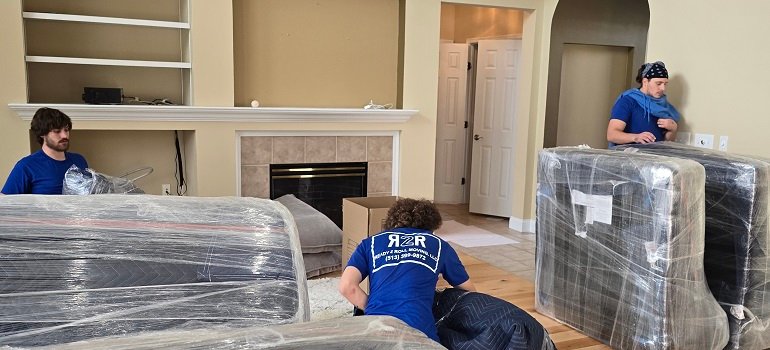
As you load, place the heaviest items—appliances, solid wood furniture—at the front of the truck for balance. Use the middle for less urgent boxes, and keep first-night items and lighting gear at the back. Some long distance moving companies in Cincinnati even suggest a written load plan so nothing important ends up buried when daylight vanishes. If daylight fades sooner than expected, the things you need most are still easy to reach.
Stay safe and warm during cold, short Winter daylight hours for a February move
Cold is not just uncomfortable; it changes how your body and brain work. Working hard in low temperatures can lead to problems like:
- hypothermia
- frostbite
- trench foot
- chilblains
February days in Cincinnati can feel much colder than the thermometer suggests when wind chill pushes felt temperatures below freezing.

Dressing in layers is the simplest protection.
- A moisture-wicking base layer moves sweat away from your skin.
- An insulating middle layer holds warmth, and a wind-resistant outer layer shields you from gusts.
- Avoid cotton as your base because once it gets wet, it stays cold.
- Warm, slip-resistant boots with good tread reduce your chances of sliding on patches of ice or packed snow.
Across many workplaces, slips, trips, and falls make up around one fifth of injuries, and winter conditions add an extra bump. Sturdy moving boxes in Cincinnati Ohio also help because they stack safely and resist slush better than worn containers. Plan regular warm-up breaks indoors—every hour or so during very cold spells—and drink water even if you do not feel thirsty. Fatigue creeps in faster in the cold, and tired people make riskier decisions, especially near the end of a long moving day.
Plan backup options for maximizing daylight during your February move
Even the best plan can collide with winter reality. Maybe a storm hits the night before your February move around limited daylight, or a major traffic snarl cuts your usable daylight in half. As a matter of fact, Cincinnati climate records show that January and February often share similar snowfall averages, and some seasons deliver far more than normal, especially during strong systems. At the same time, large winter storms can disrupt entire regions at once.
Instead of hoping everything lines up perfectly, build backup options when trying to maximizing daylight during your February move. When you book your mover, ask about flexible dates or at least flexible start times if the forecast turns ugly. Keep contact information for your:
- mover, landlords
- property managers
- utility companies

If a serious storm or deep freeze arrives, do not be afraid to pause. Winter safety advice consistently encourages people to limit outdoor time during heavy snow, freezing rain, or extreme wind chills. If you must stop before finishing, lock the truck, move only critical items, and schedule a quick follow-up trip for the next safe daylight window. A small stash of blankets, phone chargers, shelf-stable food, and water in your car or truck cab turns a long delay into an inconvenience instead of an emergency.
Use daylight planning to make your February move feel easier
Maximizing daylight during your February move will never feel exactly like a June move, and that is okay. Shorter days, more snow, and colder air all add a few extra steps, but they also come with benefits like lower moving rates and more flexible schedules. When you understand how much daylight you really have, how often snow shows up, and how cold affects both safety and energy, you can build a plan that fits the season instead of fighting it. Early start times, written timelines, brighter lighting in both homes, and a clear sense of what should happen in each part of the day make a huge difference.