
Pros and cons of living near US 22
get a free quoteMoving along the US 22 corridor can make life easier. It can also create problems you notice only after you unpack. That is why understanding pros and cons of living near US 22 matters so much for people planning a move in southwest Ohio. At first glance, places along this corridor can seem similar. They are not. Blue Ash, Milford, Indian Hill, Maineville, and Morrow all sit within the broader Cincinnati area, but daily life looks very different in each one. The real question when buying near US 22 is how the location will shape your week. That is also why people comparing neighborhoods often look at broader Cincinnati moving services before they narrow down the exact town.
Why this road matters more than many movers expect?
A road like US 22 can shape your day more than you expect. It affects how long it takes to get to work, how quickly you can stop at the store, and how stressful your evenings feel after a long day. That may sound obvious. Still, many people focus on bedrooms, yard size, or listing photos first.
Then reality hits. The route to daycare takes longer than expected. Grocery runs turn into traffic-heavy errands. Weekend plans feel less simple than they looked on the map. That is why this road matters. You are not only choosing a home near a corridor. You are choosing the pattern of daily life around it.

Even a small time difference adds up when you repeat the same trip over and over. Ten extra minutes each way starts to matter fast. So before you choose a place near US 22, ask yourself a simple question: how do you want a normal Tuesday to feel? Many households starting that search also want a familiar local name to guide their move, which is why Ready 2 Roll Moving Ohio often enters these location conversations early.
Regional access for people buying near US 22
Let’s start with the upside, because there is a real one. Living near US 22 can make regional access much easier. That matters if you work in or around Cincinnati, need regular medical visits, or simply want errands to take less time. Blue Ash and Milford show this well. Both offer stronger access to Downtown Cincinnati than smaller towns farther out, and both have weekday commuter transit options.
Blue Ash has local and commuter-oriented Metro service, while Milford has the Milford Express. For some households, that added flexibility matters a lot. It gives people another option when traffic builds or when they do not want to drive every trip.
Commute data also helps tell the story when buying near US 22. Blue Ash and Milford both report a mean travel time to work of 20.2 minutes. That is a useful benchmark because it reflects daily life, not just highway mileage. If your routine depends on getting around the region often, that kind of access can make the whole week feel more manageable.

People weighing that convenience in practical terms often compare local movers Blue in Ash Ohio when they picture how moving along the US 22 corridor would work on the ground.
Traffic, road work, and noise levels for people living near US 22
Of course, easier access rarely comes without a downside. Roads that help you move faster can also make daily life feel busier. Traffic is part of that. Road work is part of it too. One accident, one closure, or one stretch under construction can change the rhythm of the day.
Then there is the part that listing photos never show well: noise. A house can look quiet online and feel very different in person. Steady traffic noise changes how a yard feels. It affects:
- open windows
- outdoor meals
- how calm a home seems at night
Driveway access can become another issue, especially on streets with heavier flow. That may not sound major at first. Yet when you pull in and out every day, it starts to matter.
So if you like a house near this corridor, visit more than once. Go in the morning, or after work. Go on a weekend. The difference between “good location” and “too much road” often shows up only then.

Housing costs vary sharply when buying near US 22
One of the biggest mistakes movers make is treating “near US 22” as one housing market. It is not. The numbers vary a lot depending on the town. Blue Ash and Indian Hill sit on the higher end, but not for the same reasons.
Blue Ash combines:
- convenience
- business access
- strong local demand
Its median household income is $115,313, and the median value of owner-occupied housing units is $444,300.
Indian Hill is on another level entirely. Its median owner-occupied home value reaches $1,192,800, and its owner-occupancy rate is 96.7%.
Milford offers a more moderate profile. Its median household income is $78,057, and its median home value is $311,700. Those are not small differences. They shape who each town works for. Higher prices may reflect:
- access
- privacy
- schools
- prestige
Lower prices may look more comfortable at first when buying near US 22, but they can come with longer drives or fewer nearby services. So price matters, yes, but context matters more.
Blue Ash stands out for convenience and economic strength
Blue Ash tends to attract people who want things nearby and want life to function smoothly. It has a lot going for it if convenience ranks high on your list.
The city’s estimated 2024 population was 13,616, but its economic footprint is much larger than that number suggests. It had 1,320 employer establishments and 22,039 jobs. That gives Blue Ash a strong business presence relative to its resident base. That it why Blue Ash OH is a good place to live for professionals and dual-income households.
The city posts a bachelor’s degree-or-higher rate of 67.0% among adults age 25 and older, and its poverty rate is 3.8%. The mean commute time is 20.2 minutes. Those numbers point to a place with stable demand, strong services, and consistent appeal for people who value access.
Still, Blue Ash is not for everyone. A more active suburban setting can feel less private and less quiet. So the question becomes simple: do you want more convenience, even if it means a busier pace?
Milford offers balance, history, and convenient living near US 22
Milford often feels like the middle ground in this group, and that is exactly why many movers like it. It offers good regional access without feeling as commercially active as Blue Ash. The city sits 16 miles east of Downtown Cincinnati, which keeps it connected while still giving it a distinct local identity.
It also benefits from the Milford Express, which adds another commuting option on weekdays. In the 2020 Census, Milford had 6,582 residents. Its mean travel time to work is 20.2 minutes, its median household income is $78,057, and its median home value is $311,700. Those figures help show why the city often appeals to people buying near US 22.

You get access, but you may also get a more defined sense of place. That said, not every address in Milford offers the same experience. Some parts feel more connected and convenient than others. That is why this is not a town to judge from one listing. You really need to look at the exact spot. That is also why people buying near US 22 look east along the corridor and sometimes compare neighborhood access with practical relocation inisghts moving companies in Milford Ohio are willing to share.
Indian Hill offers privacy, land, and a very different budget for people buying near US 22
Indian Hill is different from the others in almost every important way. It is not the place most movers choose for quick errands or easy access to a cluster of nearby services. People usually look at Indian Hill for:
- space
- privacy
- long-term ownership
The numbers make that clear right away. The owner-occupied housing rate is 96.7%, which tells you this is a market built around ownership, not turnover. The median owner-occupied home value is $1,192,800. Median household income is listed at $250,000+, which is the top-coded display threshold.
The 2020 population was 5,825. This is a premium residential market, and it works best for people buying near US 22 who are comfortable with that level of cost. In return, they often get
- larger lots
- more separation
- much quieter residential feel
For some families, that trade makes perfect sense. For others, it does not. If daily convenience matters more than privacy, Indian Hill may feel too removed. If privacy matters most, though, it becomes much easier to understand its appeal.
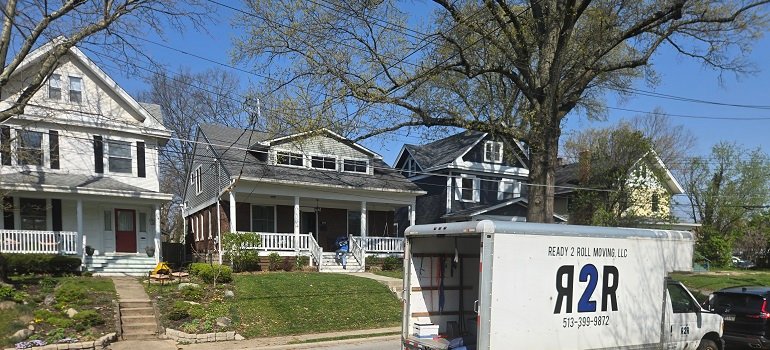
In premium areas, people buying near US 22 often picture specialized help sooner, which is one reason the phrase Indian Hill movers fits naturally into higher-end relocation planning.
Maineville and Morrow work better for smaller-town priorities
What if you want the opposite of a busy suburban rhythm? That is where Maineville and Morrow enter the conversation. These places tend to make more sense for movers who want a calmer setting and are willing to drive more for it.
Maineville had 1,405 residents in the 2020 Census. Its local government notes that village income tax revenue helps support contracted police services through the Warren County Sheriff’s Office, along with zoning and street maintenance, including snow removal. Maineville Ohio movers are readily available to people who are still deciding how far out they want to live.
People making this choice and heading toward smaller communities often compare places linked to Morrow movers when they want a quieter, less intense setting. Morrow, with 2,049 residents in the 2020 Census, has a small-village municipal structure that includes:
- administration
- police
- fire and EMS
- public works
- zoning
Those details may sound technical, but they help explain the feel of these places. They are smaller in scale, more local in rhythm, and usually less intense in daily traffic.

Still, there is a catch. Smaller towns often mean fewer nearby services, fewer transit options, and more driving for basics. So the trade is clear: more quiet, less convenience. For some people, that is exactly right.
Commute patterns and school routines defines living near US 22
Moving along the US 22 corridor can look perfect on paper and still feel wrong once real life starts. That usually happens because people underestimate the power of routine. Commute time matters, yes, but the full weekday loop matters even more.
Blue Ash and Milford both report a mean travel time to work of 20.2 minutes, which gives you a good starting point. Still, no average tells the full story. A real household may be managing:
- 2 jobs
- a school drop-off
- daycare pickup
- sports practice
- grocery stops
- maybe a medical appointment or two during the week
Suddenly, the exact route matters far more than the square footage of the house. One address can make the week run smoothly. Another can make everything feel rushed. This is especially true for households with children or only 1 car.
So before moving along the US 22 corridor, map your actual routine. Not your ideal routine. Your real one. That one step often changes which town feels like the best fit.

Full monthly cost includes far more than the home price when buying near US 22
A lot of movers focus on purchase price or rent and stop there. That is not enough. The real cost of living near US 22 goes beyond the monthly payment.
- Blue Ash has a median gross rent of $1,547 and median monthly owner costs with a mortgage of $2,478.
- Milford reports a median gross rent of $1,155 and monthly owner costs with a mortgage of $1,965.
- Indian Hill, at the upper end, shows monthly owner costs with a mortgage of $5,825.
Those numbers are large, but they still do not tell the whole story. You also need to think about
- fuel
- vehicle wea
- parking
- how much driving your location creates
In more car-dependent places, transportation can quietly become a bigger burden than people expect. Local tax structure matters too.
Maineville, for example, uses village income tax revenue to support key local services and street work. So when you compare towns, do not ask only, “Can I afford the home?” Ask something better: “Can I afford the full routine that comes with this location?”
Transit, walkability, and car dependence for anyone living near US 22
Here is another issue that people often notice only after moving along the US 22 corridor: not every location offers the same kind of daily freedom. Some places feel manageable with less driving. Others almost require a car for everything.

Blue Ash and Milford have an advantage here because both offer Metro service, including commuter options. That gives residents more flexibility, especially when they work Downtown or want a backup for some trips. Maineville and Morrow do not offer the same transit picture, which means car dependence tends to be higher.
Walkability matters too, though it changes a lot by address. A home near stores, services, or simple daily stops can feel much easier to live in than one that requires driving for every errand. This becomes especially important for older adults, teens, renters, and 1-car households. So ask yourself a plain question before moving along the US 22 corridor: how often do you really want to get in the car? The answer can narrow your options more quickly than you think.
What these comparisons really tell you if you’re thinking about buying near US 22
So what does all of this add up to? It tells you that living near this corridor is not one simple experience. That is why the pros and cons of living near US 22 cannot be reduced to one answer. It depends on what you want most. Faster access? More privacy? Lower upfront housing cost? A quieter street? Once you compare those facts against your real weekly routine, the choice becomes much clearer. And that is really the goal here. Not finding the “best” town on paper, but finding the one that fits your life best.